
Faculty Advisory Board
The board of faculty members and two graduate students reflects the wide range of colleges, schools, and departments across Texas A&M in which our faculty and students engage in research related to the humanities.
Membership
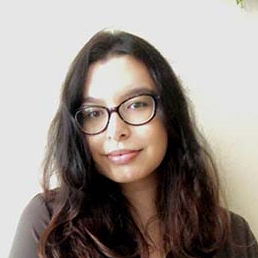
Graduate Student Representative
Nada Al-Jamal, Ph.D. Candidate
email | website
Nada Al-Jamal is a PhD student with the Department of History at Texas A&M University. Nada’s dissertation focuses on military and diplomatic history of the Cold War by examining Soviet and American relations with Arab powers. Nada’s research especially highlights Egyptian involvement in the Arab-Israeli Wars of 1967 and 1973 and its diplomacy with the superpowers throughout the crises.
COMMUNICATION & JOURNALISM
Heidi Campbell, Professor
email | website
Heidi A Campbell is Professor of Communication, affiliate faculty in Religious Studies and a Presidential Impact Fellow at Texas A&M University. She teaches undergrad and graduate course in digital media, religious studies and communications. She is also director of the Network for New Media, Religion and Digital Culture Studies, and a pioneer in the study of Digital Religion, which explores how religious belief and practices are performed online and offline within different digital cultures. She has written and edited 11 books including When Religion Meets New Media (Routledge 2010). Playing with Religion in Digital Gaming (Indiana Univ Press, 2016) and Digital Creatives and the Rethinking of Religious Authority (Routledge 2020). She has also published over 100 journal articles and book chapters on themes related to digital media and religion, and has given over 100 keynotes and invited talks on her research as institutions in the USA and abroad. She has been a visiting scholar or fellow with the Caesarea Rothschild Institute for Interdisciplinary Applications of Computer Science at the University of Haifa (Israel), the Institute for Advanced Studies at the University of Durham (UK) and the Center for Advanced Internet Studies in Ruhr University (Germany). She was the 2018 Harron Family Endowed Chair in Communication at Villanova University and has been awarded a Guest Professorship at the University of Bonn for 2023. Dr. Campbell has also received numerous awards for her research and teaching.
SCHOOL OF PERFORMANCE, VISUALIZATION & FINE ARTS
Visual, Material, and Performance Cultures
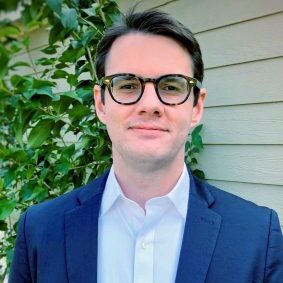
Leonardo Cardoso, Associate Professor
email | website
Cardoso’s work focuses on sound as a way to understand how governments operate. His first book, “Sound-Politics in São Paulo” (Oxford University Press, 2019), considers how noise has become a persistent problem in urban centers. The book shows that noise is not just a matter of acoustical engineering and public health but permeates a broad range of issues. In São Paulo, noise emerges in controversies about crime control, religious freedom, spatial segregation, youth leisure, civic engagement, and state accountability. Noise has encroached on São Paulo’s powerful construction, transportation, and entertainment industries.
Cardoso intends to analyze the numerous entanglements between sound and modern statecraft in his current book project. Each chapter in the book analyzes contemporary Brazil from a specific acoustic arrangement, including wiretaps, grenades, sirens, radio, and gunshot detection technology.
GEOGRAPHY
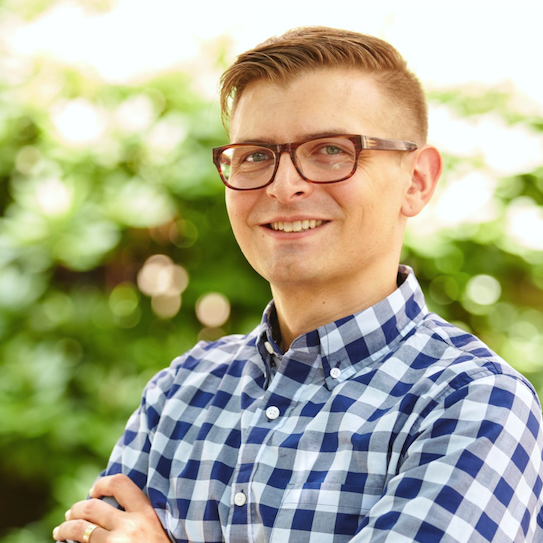
John Patrick Casellas-Connors, Assistant Professor
email | website
Dr. Casellas Connors is broadly trained as a human-environment geographer. His research addresses the social and political dimensions of environmental management programs and food systems. Utilizing an array of qualitative and quantitative methods, his research explores the ways that humans understand and transform their environments and ultimately are affected by these changes. His current research is particularly focused on how changes in the composition of agricultural productions systems across scales may affect the resilience of food systems and influence outcomes in food security. In addition, he is involved with a project examining wildlife management programs in suburban landscapes, where many species now thrive, but institutions and patterns of land use present distinct challenges for management.
ENGLISH
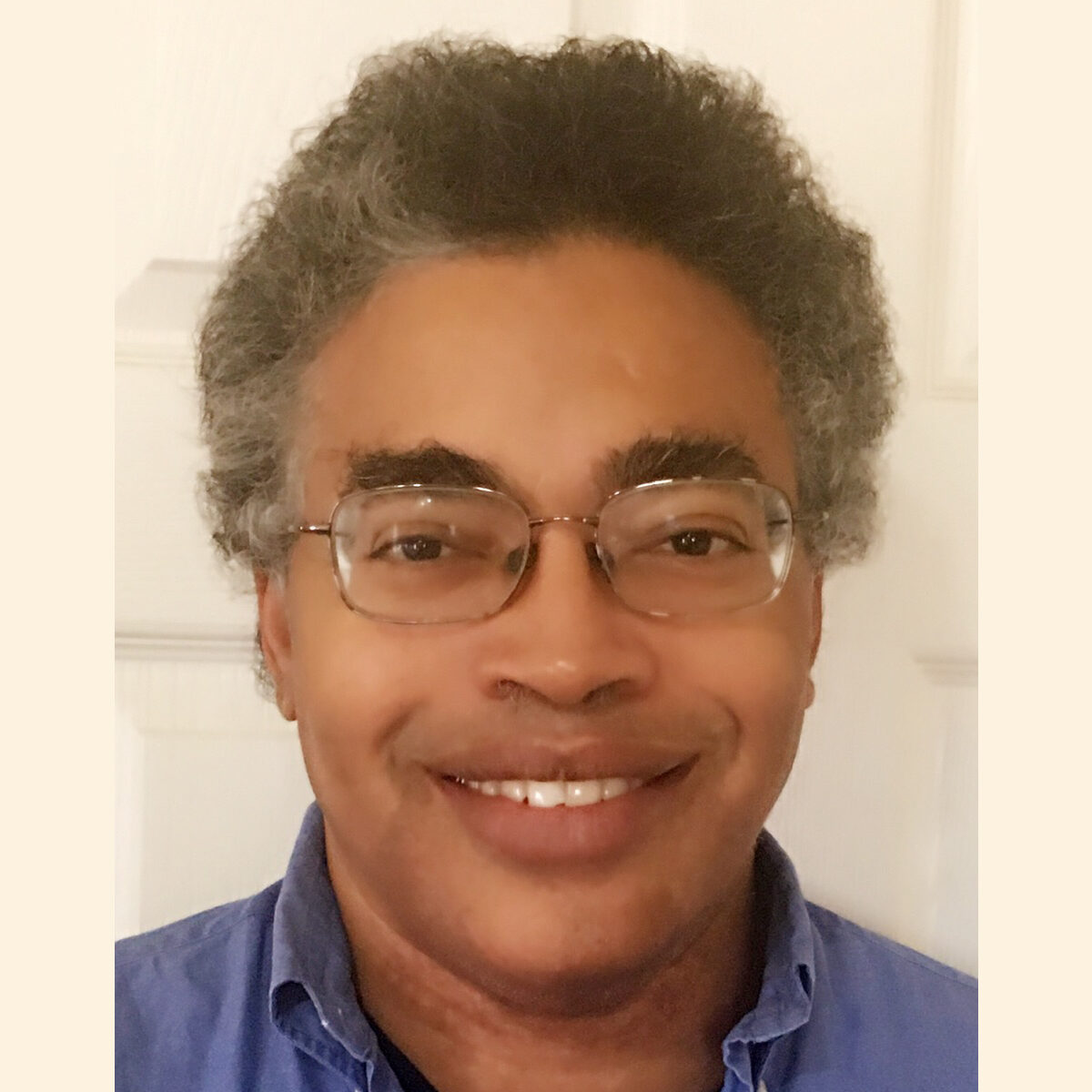
Michael Collins, Associate Professor
email | website
Dr. Michael Colin's published scholarship explores the relationship between risk, altruism, sibling rivalry and sovereignty as that relationship emerges in works by a range of writers (including Etheridge Knight, Yusef Komunyakaa, Norman Mailer, Ayn Rand, Jacques Derrida, and Dante) and in institutions such as the Group of 77 developing nations. He is currently working on several scholarly and creative projects that extend his exploration of the nexus between risk, altruism, sibling rivalry and sovereignty.
PSYCHOLOGY AND BRAIN SCIENCE
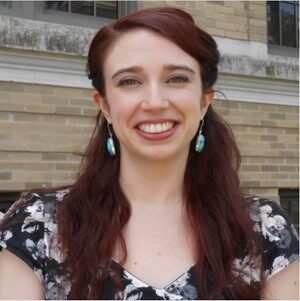
Sara Dowd, Lecturer
email | website
Sara Dowd received her PhD in Social Psychology from Texas A&M University after studying at Baruch College in New York City. Sara is most passionate about teaching and uses her research as a tool to encourage critical and independent thinking, as well as a method of deriving and communicating insight. Deeply interdisciplinary, she believes that the arts and sciences are two sides of the same coin and continuously integrates both into her pedagogical practices.
HISTORY
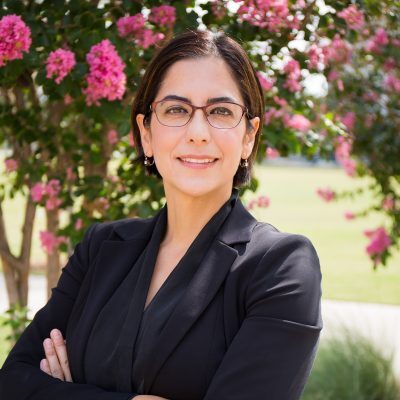
Side Emre, Associate Professor
email | website
Side Emre, Ph.D. is an Associate Professor of Near Eastern History and Islamic World at Texas A&M University, Department of History. Her research agenda focuses on the investigation of early modern Islamic empires of the Middle East—the Ottoman Empire—and the socio-political and cultural impact of Islamic mysticism (Sufism), mystics (Sufis), and mystical orders on the relations between state and society. Her book Ibrahim-i Gulshani and the Khalwati-Gulshani Order: Power Brokers in Ottoman Egypt (Leiden, Boston: Brill, 2017) won the 2018 Fuad Koprulu Honorable Mention Book Award. She has authored numerous peer-reviewed articles and book chapters. Her current book project is on mystical cosmographies written by 16th century Ottoman Sufi authors.
PHILOSOPHY & HUMANITIES
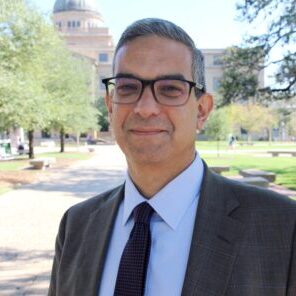
Theodore George, Professor
email | website
Theodore George is Professor of Philosophy and Presidential Impact Fellow at Texas A&M University. His expertise is in hermeneutics, or, the study of interpretation, as well as applied hermeneutics, and, more generally, contemporary continental European philosophy, classical German philosophy, and the philosophy of art and aesthetics. Some of his recent publications include The Responsibility to Understand: Hermeneutical Contours of Ethical Life (Edinburgh University Press, 2020); co-edited with Gert-Jan van der Heiden, The Gadamerian Mind in the Routledge Philosophical Minds series (Routledge, 2021); and the Stanford Encyclopedia of Philosophy entry, “Hermeneutics” (2021). He has also recently completed his first book of poetry, Motherfisher: a haiku-story of grieving in the age of COVID (Alien Buddha Press, 2021). Dr. George’s research has been supported by the Canadian Social Sciences and Humanities Research Council (SSHRC); the Fulbright Commission; the Goethe Institute; the German Academic Exchange Service (DAAD); and the Freiburg Institute for Advanced Studies (FRIAS) at the University of Freiburg, Germany; and, at Texas A&M, by the Presidential Impact Fellows Program; the Rothrock Fellows Program; and the Melbern G. Glasscock Center for Humanities Research, and he is a recipient of the Texas A&M Association of Former Students College-level Teaching Award. His current book project concerns the development of a new, globalist theory of interpretation.
ARCHITECTURE
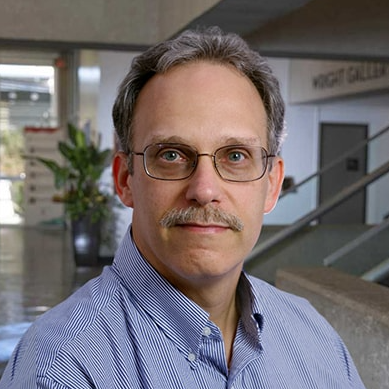
Kevin Glowacki, Associate Professor
email | website
An archaeologist and architectural historian, Kevin Glowacki has many years of experience excavating and documenting sites in the Mediterranean. His most recent research focuses on vernacular architecture at the Late Bronze Age-Early Iron Age settlement of Kavousi Vronda and the formative stages of the Bronze Age Minoan city of Gournia, both sites located in eastern Crete (Greece). At Texas A&M, Glowacki is Associate Professor in the Department of Architecture, where he teaches courses in architectural history and heritage of the built environment. He also served as Director of the Center for Heritage Conservation in the TAMU School of Architecture from 2016 to 2021. Glowacki is the recipient of the Award of Excellence in Undergraduate Teaching from the Archaeological Institute of America, the ING Professor of Excellence Award, and the Montague-Center for Teaching Excellence Award from Texas A&M University. He has been a Faculty Fellow of the Center for Heritage Conservation since 2006 and served as co-editor of Preservation Education and Research, the journal of the National Council for Preservation Education from 2009 to 2012.
HOSPITALITY, HOTEL MANAGEMENT AND TOURISM
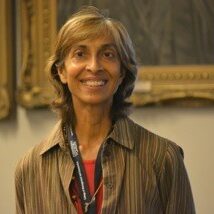
Tazim Jamal, Professor
email | website
Tazim Jamal is a Professor in the Department of Hospitality, Hotel Management and Tourism at Texas A&M University (TAMU), USA. She is also Fellow of the International Academy for the Study of Tourism. Her research interests lie in tourism and sustainability, collaborative tourism planning, and ethical issues in travel and tourism. She is the author of Justice and Ethics in Tourism (2019, Routledge), co-editor of The SAGE Handbook of Tourism Studies (2009), as well as an Associate Editor of the Encyclopedia of Tourism (2016, 2022). A special issue of Justice and Tourism was co-edited by Tazim Jamal and James Higham in the Journal of Sustainable Tourism (Vol. 29, 2-3, 2021).
TEACHING, LEARNING, AND CULTURE
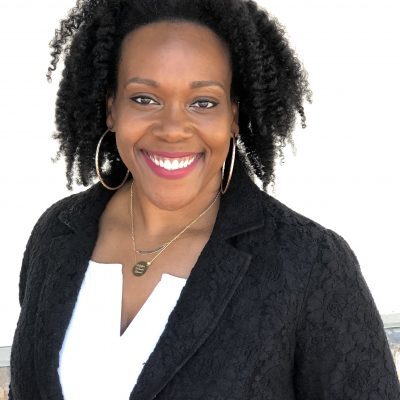
ArCasia James-Gallaway, Assistant Professor
email | website
ArCasia D. James-Gallaway is an assistant professor in the Department of Teaching, Learning and Culture at Texas A&M University. As an interdisciplinary historian of education, she examines and illuminates African American struggles for educational justice, and her scholarship follows three interrelated strands of analysis: 1) the history of African American education, 2) Black history education, and 3) gendered (anti)Blackness in education. James-Gallaway’s research engages oral history methodology, critical race theory, Black feminist theory, and critical geographies of race and has been supported by organizations such as the Ford Foundation. She has published her work in more than two dozen book-chapters and peer-reviewed journal articles, including History of Education Quarterly; Race Ethnicity and Education; Paedagogica Historica, Oral History Review, and Journal of Black Studies.
Graduate Student Representative
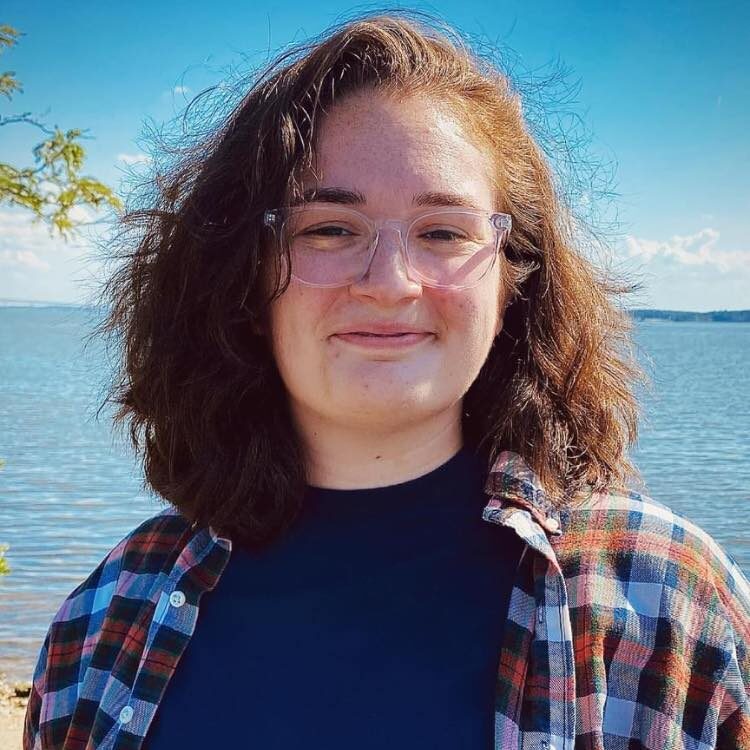
Alexandra LaGrand, Ph.D. Candidate
email | website
Alexandra E. LaGrand (she/her/hers) is a Ph.D student studying English with certificates in Digital Humanities and Women’s and Gender Studies. She specializes in Shakespearean drama as performed in the eighteenth and nineteenth centuries. She is particularly interested in eighteenth- and nineteenth-century British and American actresses and performance prompt books. She currently serves as the Treasurer for the English Graduate Student Association.
SOCIOLOGY
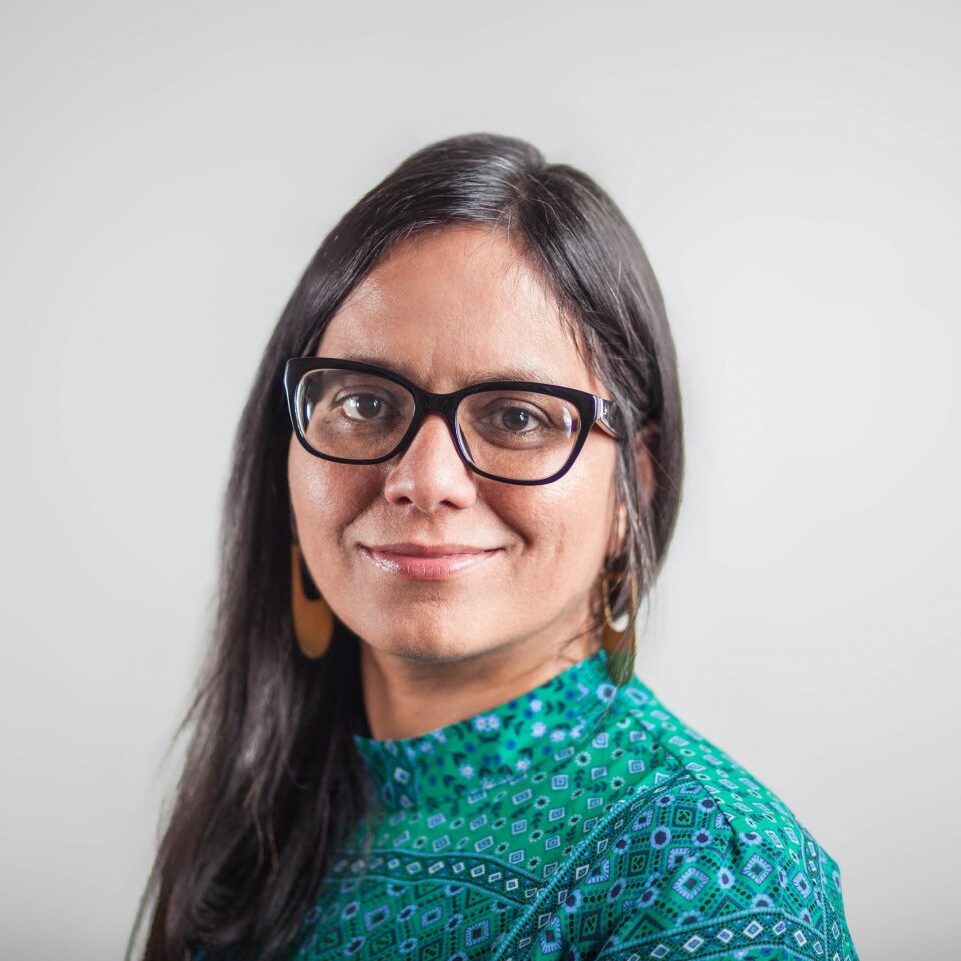
Chaitanya Lakkimsetti, Associate Professor
email | website
Professor Chaitanya Lakkimsetti’s work centers on gender, sexuality, law and citizenship. In her empirical and theoretical work, she employs transnational and intersectional approaches to study sexual and gender inequalities in a global context.
Her book Legalizing Sex: Sexual Minorities, AIDS and Citizenship in India (Forthcoming, NYU press) and related articles (published in Signs and Qualitative Sociology) examine how sexual and gender minorities demand legal and political citizenship in contemporary India. More particularly she examines how the global HIV/AIDS crisis has transformed the relationship between gender and sexual minorities and the Indian state. She deploys Foucauldian lens of biopolitics and postcolonial understandings of the state to understand these contemporary transformations. Her work brings to light contemporary struggles for social justice (including the successful struggles against the colonial era anti-sodomy law) undertaken by sex workers and LGBTQ groups in India.
Dr. Lakkimsetti’s second project on urban inequalities and intimate labor takes a transnational feminist lens to theorize marginalization of women from sexual labor in establishments called dance bars in the state of Maharashtra. Her work (published in Sexualities and positions: asia critique) highlights that that in the context of growing urban inequalities poor and marginalized women also experience “moral dispossession” as sexual labor is stigmatized and criminalized.
In collaboration with her colleague Dr. Vanita Reddy (English Department) she is working on a comparative project on #metoo movements in India and the U.S. The goal of this project is to develop comparative frame works to theorize feminist movements in a transnational context.
GLOBAL LANGUAGES AND CULTURES
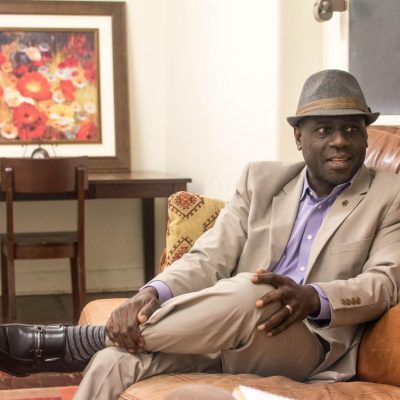
Alain Lawo-Sukam, Associate Professor
email | website
Dr. Alain Lawo-Sukam is an Associate Professor of Hispanic and Africana Studies, and Coordinator of Africana Studies program in the Department of Global Languages and Cultures. He is the author of La poesía de Guinea Ecuatorial en su contexto colonial y (trans)nacional (2019) and Hacia una poética afro-colombiana: el caso del Pacífico (2010), the creative writing books Mange-Mil y sus historias de tierra caliente (2017) and Sueño con África. Dream of Africa. Rêve d’Afrique (2013). He has published numerous articles in national and international peer reviewed journals. He is a member of several editorial boards, and has served as manuscript reviewer for many national and international journals. He is a recipient of numerous grants and awards; among the most recent are the Humanities & Arts Fellows program, College of Liberal Arts’ Achievements in Climate and Inclusion Award (ACI), AFS College-Level Distinguished Achievement Award for Teaching, Glasscock Research Publication, the Hispanic Studies Research Enhancement and High Impact Research Grants.
SCHOOL OF PERFORMANCE, VISUALIZATION & FINE ARTS
Art History
Dawna Schuld, Associate Professor
email | website
Dawna Schuld is Associate Professor of Modern and Contemporary Art History in the School of Performance, Visualization & Fine Art. Her research concentrates on points of intersection between art, technology, and biology, with an emphasis on how the perceptual phenomena of human experience are implemented in art. She is the author of Minimal Conditions: Light, Space, and Subjectivity (The University of California Press, 2018), and co-editor (with Cristina Albu) of Perception and Agency in Shared Spaces of Contemporary Art (Routledge, 2018). For her work, Dr. Schuld has been awarded Dana and David Dornsife Research Fellow at the Huntington Library Pasadena, California and a Senior Research Fellowship at the Henry Moore Institute in Leeds.
ARCHITECTURE
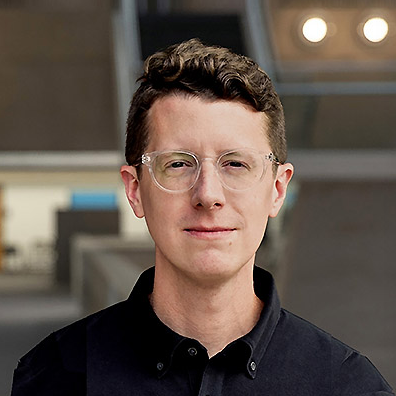
Zachary Stewart, Associate Professor
email | website
Zachary Stewart is an architectural historian with dual training in the fields of architecture and art history. He specializes in the material culture of medieval Europe. His research focuses on the buildings, cities, and landscapes of medieval Britain.
Stewart’s current book project, Collaborative Gothic: Building the Parish Church in Late Medieval England, investigates the parish church as a vehicle for innovative material production during the two centuries between the Black Death and the Reformation. His research on this and numerous other aspects of medieval building culture has appeared in The Journal of Architectural Education, Speculum, Different Visions, The Journal of the Society of Architectural Historians, and The Antiquaries Journal as well as in numerous edited collections.
ANTHROPOLOGY
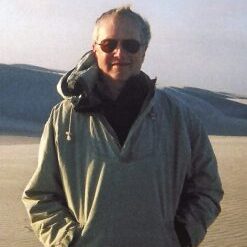
Shelley Wachsmann, Professor
email | website
Shelley Wachsmann is the Meadows Professor of Biblical Archaeology in the Department of Anthropology at Texas A&M University. His research focuses on ship iconography of the eastern, ancient Mediterranean. Additionally, he is interested in the potential of deep-submergence archaeology. These areas of expertise have allowed Dr. Wachsmann to lead several field projects throughout the Mediterranean Sea. His most recent field work was through the Ioppa Maritima Project, a deep-sea survey of shipwrecks in Israel. Furthermore, he has authored several books and articles, including The Gurob Ship-Cart Model and Its Mediterranean Context (2013), and Understanding the Boat from the Time of Jesus: Galilean Seafaring (2015).
