
Past Projects
Faculty Principal Investigator: Dr. Laura Mandell
 Texas A&M is proud to have hosted the Advanced Research Consortium (ARC) through August 31, 2024. Under the directorship of Dr. Laura Mandell, ARC developed open, searchable, and aggregated scholarly resources, conducted peer review of digital projects, and provided a platform for collaboration and scholarly engagement within its affiliated nodes: Networked Infrastructure for Nineteenth Century Electronic Scholarship (NINES), 18thConnect, the Medieval Electronic Scholarly Alliance (MESA), Studies in Radicalism Online (SiRO), and Modernist Networks (ModNets). Dr. Mandell and her collaborators also developed BigDIVA (Big Data Infrastructure Visualization Application), a web-based application through which scholars could access the extensive research materials within the ARC Catalog; and the text transcription software TypeWright.
For additional information, please contact Dr. Mandell at mandell@tamu.edu.

The Carlyle Letters Online, originally launched on 14 September 2007, is the electronic version of Duke-Edinburgh edition of The Collected Letters of Thomas and Jane Welsh Carlyle, published by Duke University Press since 1970 and recently completed with the publication of volume 50. In addition to featuring the letters published in the print edition, the site also features materials such as the Carlyles' photo albums, and the collection held at Duke's Rubenstein Rare Books Library, and will soon include images of the letters found too late for publication in the print edition, as well as undated letters.
Faculty Principal Investigator: Dr. Eduardo Urbina
The Cervantes Project consists of an online, scholarly variorum edition of Don Quijote; an extensive collection of Quijote textual iconography (replete with metadata), consisting of over 60,000 illustrations spanning over 1,700 editions; and a collection of hundreds of Quijote themed ex-libris labels. The variorum edition was the first of its kind—the result of a 5-year project started in 1998 with funding from the National Science Foundation and the National Endowment for the Humanities. The Cervantes Project was conceived of (and has been directed by) Dr. Eduardo Urbina, Professor Emeritus of the Hispanic Studies Department at Texas A&M.
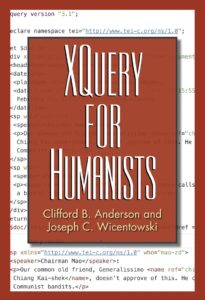 The Coding for Humanists book series provides an introduction to technologies applicable to digital humanities scholarship without assuming the reader has prior technical background.
Researcher and Developer: Dr. Bryan Tarpley

Corpora is "a dataset studio for the Digital Humanities." It's billed as such because it allows scholars with little to no programming experience to create a data schema for their digital projects (referred to as a "corpus"). Once that schema is created, data can immediately be created according to that schema via dynamically generated web forms, giving their corpus a backend that can be populated collaboratively. Aside from allowing data to be collected, Corpora also has a "baked-in" API (also dynamically generated) that then allows independent website frontends (or any computational tool) to browse, search, and explore the data in their corpus.
Beyond acting as backend data storage, Corpora is architected in such a way as to allow for plugins to be developed that drastically broaden its capacity. Examples include the ability to OCR documents en-masse with Tesseract or Google Cloud Vision, the ability to perform natural language processing tasks, etc. Plugins also serve as a way to containerize custom content types and code to support specific projects, like the plugins for the Advanced Research Consortium, The New Variorum Shakespeare, The Carlyle Letters Online, and The Maria Edgeworth Letters Project.
For additional information, please contact Dr. Tarpley at bptarpley@tamu.edu.
Faculty Principal Investigator: Dr. Gary Stringer
DigitalDonne constitutes volume 1 of The Variorum Edition of the Poetry of John Donne (Indiana UP, 1995- ), a collaborative edition drawing on the labors of over 30 scholars from the United States and abroad. The edition’s primary aim is two-fold: to produce a newly edited critical text based on exhaustive analysis of all known manuscript and significant print sources of Donne’s poetry; to present a complete digest of critical and scholarly commentary on the poetry from Donne’s time to the present.
 The Early Modern OCR Project (eMOP) aims to publish an open source OCR workflow, improve the visibility of early modern texts by making them fully searchable, and form a community of scholars and institutions interested in the digital preservation of these texts. Its goal is to foster collaboration among various disciplines, and, in doing so, cultivate inter-institutional and international relationships that make possible new kinds of humanities research.
Faculty Principal Investigator: Dr. Laura Mandell
The Feminist Controversy in England is a cultural analytics and data visualization project. The goal is to postulate non-binary gender terms that have been derived from texts themselves, and to demonstrate how this procedure offers an alternative method for historicizing gender.
Faculty Principal Investigator: Dr. William Bedford Clark
As pianist and teacher, Herbert Ricker was a significant force in the cultural life of the Southwest in the middle-third of the twentieth century. He could trace his musical pedigree back to Beethoven through a series of renowned artist/teachers and was himself a gifted composer. This project aims at preserving the complete body of his extant work. Privileged to have studied with him as a young man, I naturally had a personal interest in making these scores available to present and future generations, but the quality of the music itself justifies preservation and wider dissemination.
There are six Intermediate-level instructional pieces that combine charm with sophisticated harmonic and technical elements, and Ricker's most ambitious piece, Sonatine (in reality a full-fledged sonata), was performed publically by the noted Czech pianist Rudolf Firkusny and highly regarded by a number of influential contemporaries. It clearly warrants revival. Scholars of local and regional history and the interplay between "provincial" and elite cultures should likewise find this archive valuable, an invitation to future research into the cross-pollination between the vital, if often overlooked, arts scene in the American heartland and coastal "high" culture.
The Interiority Research Project
The Interiority Research Project consists of an interdisciplinary collaborative group who come together around the broad question: What is the status of an “inner life” in contemporary cultures organized around technology, entertainment and capitalism? Each participant is working on an individual research project connected in some way to interiority as a human capacity. An interactive, digital working environment will allow participants to collaborate, share resources, and comment on each others’ work.
Principal Investigator: Dr. Bryan Tarpley
 CoDHR participated in a $5,000,000 grant awarded to Canadian Higher Ed Institutions called the Linked Infrastructure for Networked Cultural Scholarship (LINCS). This grant project addresses the following problem: Humanities scholars have unprecedented quantities of data for addressing complex social processes, but are hampered by the lack of meaningful connections between, and by the incompatibility of, online materials. Most continue to interact with cultural data only through reading rather than by leveraging algorithmic processes to answer major questions about human culture. Humanities researchers need a smarter, “semantic” web whose links will elucidate the diverse causes, effects, and significance of human action and expression.
Faculty Principal Investigators: Dr. Matthew Campbell | Dr. William Klugh Connor III
As part of Performance in World Cultures (PERF 301), A&M students have produced hundreds of oral histories, hours of multimedia performances, and dozens of musical instruments, artistic works, and interdisciplinary research projects while exploring the folkloric diversity in their own backyards. Lorefest, our public-facing festival, is a unique opportunity for Texas A&M students and scholars, local artists and business owners, family and friends, to explore and expand theirs and their neighbors’ cultural heritage through intercultural and multimedia storytelling in a variety of mediums and venues.
Mapping Cool Corridors Thermal Exposure and Shade Dynamics for a Walkable TAMU
Graduate Student Principal Investigator: Cuiling Liu
This proposal aims to generate high-resolution thermal exposure and shade change maps of the Texas A&M campus to guide the development of "cool corridors." Extreme heat presents significant environmental and health risks, affecting both the psychological and physiological well-being of individuals. Cool corridors are pathways designed to minimize thermal exposure by maximizing natural shade or incorporating artificial shading structures. This study will create a digital model of building surfaces and tree canopies, which will serve as inputs for shadow function in the microclimate model SOLWEIG to produce hourly shade distribution maps for the campus. These shadow maps will be overlaid with the campus sidewalk map through an overlay analysis, resulting in hourly sidewalk shadow area maps. By integrating these shadow maps and campus human mobility, the project will provide actionable insights for campus planners to design more walkable and comfortable cool corridors, improving the comfort, safety, and well-being of students and staff during periods of extreme heat.
Maps, Soldiers, and Nostalgia in the European Theater of Operations, 1944-46
Faculty Principal Investigator: Dr. Adam Seipp
During the summer of 1945, hundreds of U.S. Army units in Europe produced souvenir maps for their soldiers to take home. This project is digitizing and annotating the 130 maps in the collection at Texas A&M's Cushing Library - the largest in the world.
Faculty Principal Investigator: Dr. Susan Egenolf
 The NEH-funded Maria Edgeworth Letters Project is a collaborative, open-access digital edition of letters written by the Anglo-Irish novelist and educational writer Maria Edgeworth (1768-1849) and shared by over 30 archives around the world. Letters will be posted in raw text, TEI encoded, and, in most cases, accompanied with a photograph of the manuscript letter pages. The project is led by editors Jessica Richard (Wake Forest University), Hilary Havens (University of Tennessee), Robin Runia (Xavier University of Louisiana), and Susan Egenolf (Texas A&M). We've completed the first stage of our crowd-sourced transcriptions at Maria Edgeworth Letters | Zooniverse.
The Mexican Reintegration Project
The Mexican Reintegration Project (MRP) is a global research initiative aimed at supporting the international community by conducting research of the complexity of deportation phenomenon. By focusing on Mexico and the United States, we conduct research that can document the challenges deportees experience in efforts to reintegrate into Mexico. Our website provides data from our ongoing research as well as resources from other organizations that can support deportees in the reintegration process.
Montemayor's Diana
Montemayor's Diana is a digital scholarly edition of Bartholomew Yong’s English translation of Jorge de Montemayor’s pastoral romance Los siete libros de la Diana, one of Shakespeare’s sources for The Two Gentlemen of Verona (and other plays like As You Like It and Twelfth Night).
Networks for New Media, Religion, and Digital Culture
Networks for New Media, Religion, and Digital Culture is designed for scholars, students and those interested in exploring topics and questions emerging at the intersections of religion, the internet and new, social and mobile media. The Network offers an interactive space for researchers and others wishing to learn more about this growing research area to share related resources and highlight news items as well as events.
Director: Dr. Robert Stagg
Digital Editor: Dr. Katayoun Torabi
Associate Digital Editors: Dr. Kris May | Dr. Dorothy Todd
 The New Variorum Edition of Shakespeare (NVS), which began with the publication of Romeo and Juliet in 1871, is now published open-access in digital form, beginning with two editions, The Winter’s Tale and A Midsummer Night’s Dream. The digital NVS has been designed with three main goals in mind: 1) to teach students and early career researchers the concepts behind variorum editing through interface design as well as tutorials; 2) to enable searching across and within volumes and variants using Modern English and major Act-Scene-Line numbers; and 3) to be interoperable with, and allow access to, other major Shakespeare digital resources including bibliographies of criticism, digital copies of editions published since Shakespeare’s time, images, and videos (set for third-phase development). Following the practice of state-of-the-art digital humanities projects, we aim to render Shakespeare’s texts and international criticism available world-wide.
Faculty Principal Investigator: Dr. Laura Mandell
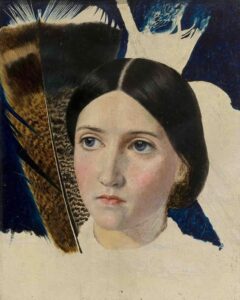 The Poetess Archive constitutes a resource for studying the literary history of popular British and American poetry. The Poetess Archive Database now contains a bibliography of over 4,000 entries for works by and about writers working in and against the "poetess tradition," the extraordinarily popular, but much criticized, flowery poetry written in Britain and America between 1750 and 1900.
Graduate Student Principal Investigator: Alexandra E. LaGrand
 Points Like A Man: The Shakespearean Breeches Performance Catalogue curates records of major performances of Shakespearean breeches and disguise roles by women from 1660-1900. This project began by focusing on performances by actresses in London, but has since grown to collect records of breeches performances from around the world. Breeches roles are male character roles played by women actresses, and disguise roles are female character roles, played by women actresses, that disguise themselves as men during the play. Shakespeare plays are particularly rife with these kinds of roles, and the period between 1660-1900 can be considered a golden age in theatre history for these kinds of roles.
Redes Migrantes
Redes, migrantes sin fronteras is a non-profit digital initiative that connects migrants with support associations by providing a directory and a map of shelters, organizations, and programs. It is also a forum of expression to motivate volunteering to help the most vulnerable population.
Reverberations of Racial Violence
Reverberations of Racial Violence documents a historic NEH-sponsored conference on the centennial of the 1919 Canales Investigation. The conference took place at the Bob Bullock State Museum from January 31 to February 1, 2019.
Faculty Principal Investigator: Dr. Tianna Helena Uchacz
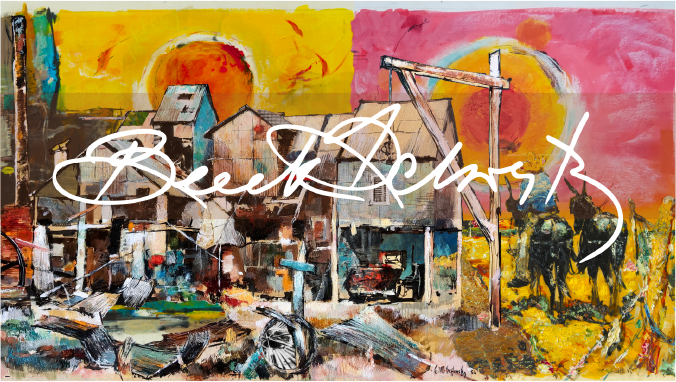 In July 2021, in collaboration with the University Art Galleries, collectors and authors Bill and Linda Reaves launched the Texas Art Project. The Texas Art Project promotes the history and legacy of art in Texas through a major art donation, series of exhibitions, and pedagogical initiatives that draw on art collections across the state. TAMU was chosen as a collaborator for the Texas Art Project due to its land grant mission. Additionally, the permanent collection of the J. Wayne Stark Galleries focuses on American paintings, prints, drawings, and photographs of the 19th and 20th centuries, with a strong emphasis on Texas art; Texas A&M University Press publishes the Joe and Betty Moore Texas Art Series, and PVFA offers a course on Texas Art History (ARTS 329).
Partnering with CoDHR to leverage the expertise and resources in the DH community was a natural step for the project. As a proof-of-concept for a collaboration, a small, self-contained subset of Texas Art was chosen: the oeuvre of Buck Schiwetz, who was an A&M faculty member and subject of a major Texas Art Project exhibition at the Stark Galleries (September 21 to December 16, 2023) that travelled across Texas until January 2025. Longer-term intentions are to build a broader, public-facing database of Texas art, drawing on works in public and private collections, facilitated by the Corpora database. Future iterations of ARTS 329 would have major projects dedicated to populating the database and documenting the works via archival research.
Dallas Women's Gallery
The Dallas Women’s Gallery (DWG) project is an interactive, multimedia timeline produced under the aegis of the Texas Art Project at CoDHR and in collaboration with Art This Week, a non-profit public arts education organization. The project conveys the pioneering and central role of the DWG in establishing communities and career paths for women artists in the Dallas-Fort-Worth area throughout the duration of its existence (1975–1988). The gallery was founded as a co-operative intended to promote women artists who were struggling to gain a foothold and visibility in a male-dominated art world.
Faculty Principal Investigator: Dr. Daniel L. Schwartz
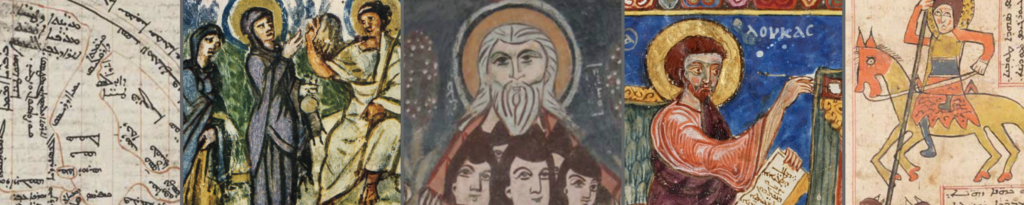 Syriaca.org: The Syriac Reference Portal is a digital project for the study of Syriac literature, culture, and history. Today, a number of heritage communities around the world have linguistic, religious or cultural identities with roots in Syriac language and culture. Syriaca.org exists to document and preserve these Syriac cultural heritages. The online tools published by Syriaca.org are intended for use by a wide audience including researchers and students, members of Syriac heritage communities and the interested general public. In order to meet the diverse needs of users, the design of Syriaca.org is inherently collaborative and fluid. The principle objectives are threefold: 1) to compile and organize core data related to the study of Syriac sources; 2) to create digital tools for widely disseminating this data and facilitating further research; 3) to create an online hub (cyberinfrastructure) to assist future research in the field of Syriac studies.
Grant funds from the National Endowment for the Humanities (NEH) will advance these endeavors for expanding the Syriac corpus through a new project, “Linking Texts and Data from the Medieval Middle East: Next-Generation Discovery and Access Tools for Syriac Cultural Heritage”, set to start in the Fall.
Digital Syriac Corpus
Digital Syriac Corpus is a curated digital repository of TEI encoded texts written in classical Syriac. The interface provides effective browse and search functionality. Individual texts may be downloaded to facilitate publishing projects, such as the production of critical editions, and research, such as more advanced corpus linguistic analysis. We invite users to submit corrections and to contribute digital texts.
The Srophé App
The Srophé App is an open source database designed to support digital humanities research in the history of culture. Srophé [pronounced, Srō-Fay] is an eXist-DB application which enables researchers to encode and link historical data, with a focus on texts, persons, geography, events, and material artifacts. The Srophé App was created as the digital publication platform for Syriaca.org: The Syriac Reference Portal and thus its original use case was pre-modern cultural heritage data associated with the Syriac language (a dialect of Aramaic).
The Victorian Female Detective Archive
The Victorian Female Detective Archive provides transcriptions of Victorian literature featuring female detectives.
 The Women's Book History Bibliography is a database of secondary sources on women's writing and labor. Primarily its sources are in English, and non-English sources have a rough translation included. The database is a thorough snapshot of studies that take women as their primary subjects.
Graduate Student Principal Investigator: Edudzi David Sallah
This project is an independent research into the episcopacy of the African Methodist Episcopal Zion Church (AMEZ), exploring and documenting particular information, events, and accomplishments of the lives of the bishops of the AMEZ from the church’s inception to date. The project at this initial stage serves as a final DH project for the award of a Graduate Certificate in Digital Humanities at Texas A&M University. The project will continue to grow as a digital archive and an interactive blog website. This is a long-term project and will be regularly updated as and when data becomes available.